
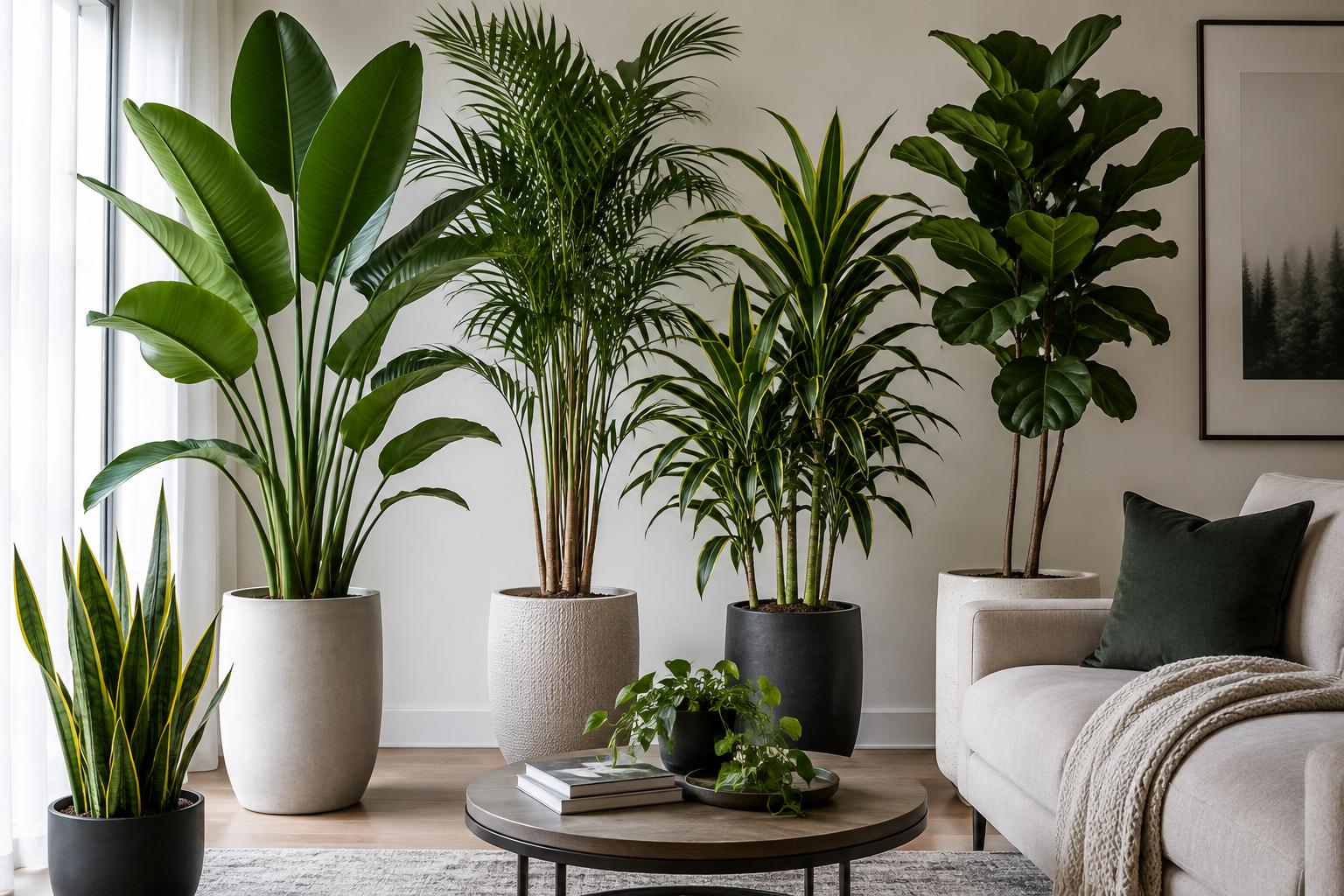
Tall Indoor Plants That Don’t Need Sunlight
A tall plant does more for a room than a small one on a shelf — it fills empty corners, adds height at eye level, and gives a space a finished feel that a cluster of small pots usually can’t match. The good news is you don’t need a bright, south-facing living room to pull this off.
Several large tropical species evolved under forest canopy, catching filtered light instead of direct sun, which is exactly why they adapt so well to indoor rooms with average daylight. That said — not every plant marketed as “low light” actually is one. A few popular tall plants (Fiddle Leaf Fig, for instance) genuinely need bright light to stay healthy, and we’ll flag those honestly below instead of lumping everything together.
Why Choose Tall Indoor Plants?
- Fill vertical space that small plants can’t
- Act as a natural room divider or focal point
- Soften hard corners and empty wall space
- Need less frequent repotting than a cluster of small plants
- Often live 10+ years with basic care
Can Tall Plants Really Grow Without Sunlight?
Not in zero light — every plant needs some light for photosynthesis, tall ones included. What “low-light tolerant” actually means here is a plant that can get by on:
- Bright indirect light a few feet from a window
- North- or east-facing window light
- Full-spectrum LED grow lights (10–12 hrs/day)
- Well-lit office lighting
A genuinely windowless room will need a grow light for any of these to last long-term — including the toughest ones on this list.
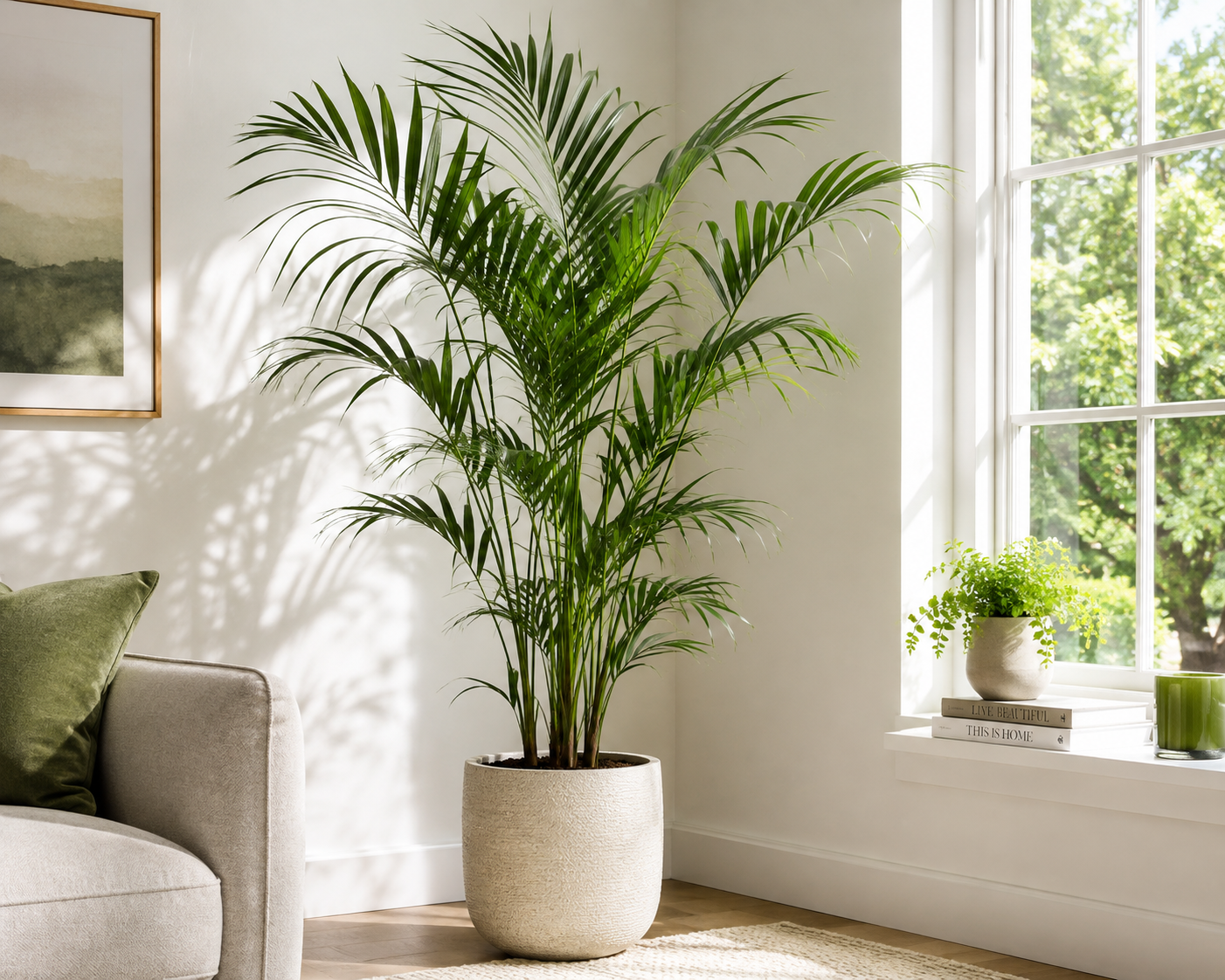
1. Kentia Palm (Howea forsteriana)
Long a favorite for hotel lobbies precisely because it tolerates lower light and drier air better than most palms, without looking as stiff as a snake plant.
Height indoors: 6–10 ft Water: Every 1–2 weeks; let the top 2 inches dry out first. Pet safety: Non-toxic — safe around cats and dogs.
2. Dracaena Marginata (Madagascar Dragon Tree)
Slim, curving trunks topped with narrow red-edged leaves — one of the easiest ways to add height to a room without much bulk.
Height indoors: Up to 8 ft Water: When the top half of the soil is dry, roughly every 1–2 weeks. Pet safety: Toxic to cats and dogs if ingested.
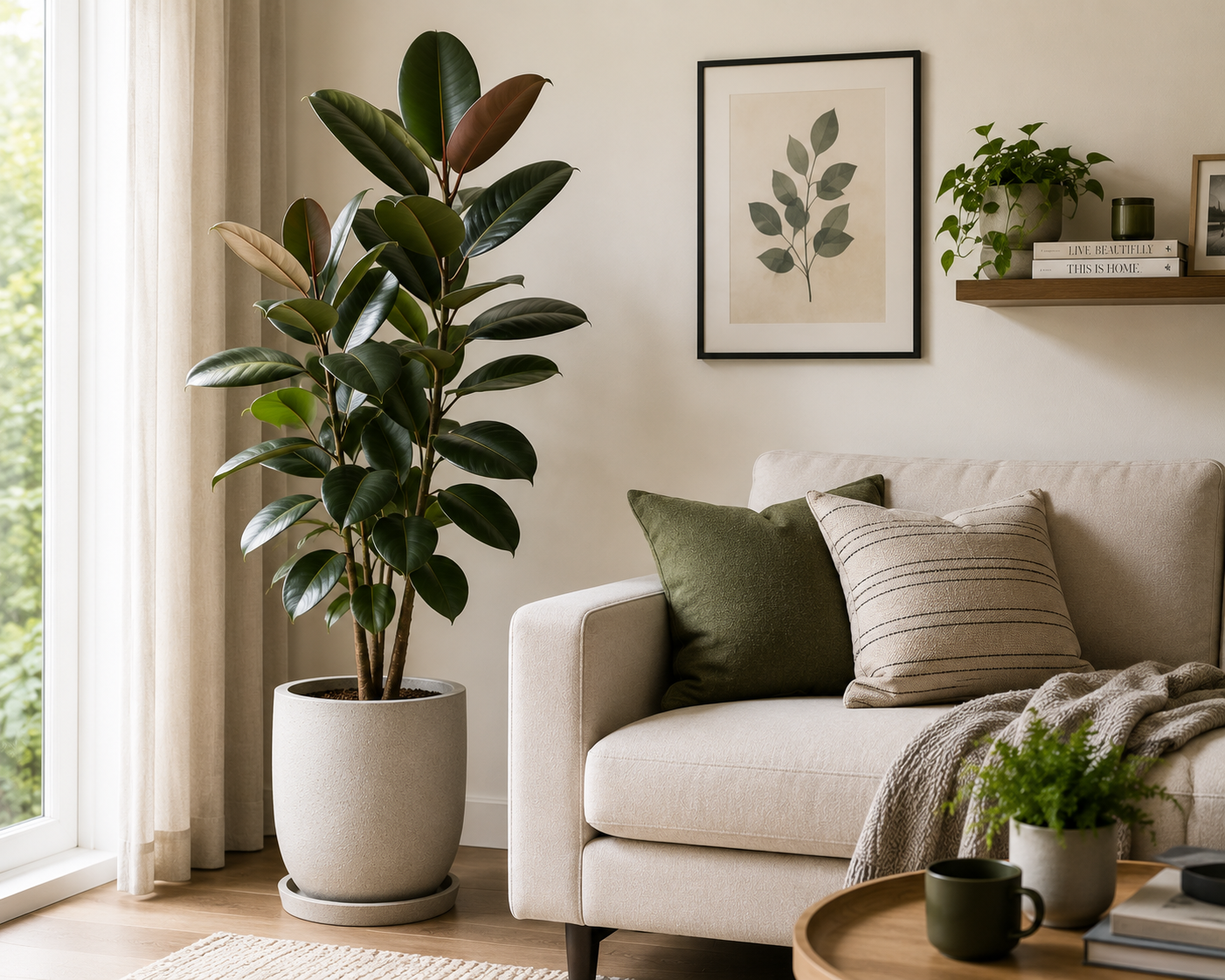
3. Rubber Plant (Ficus elastica)
Thick, glossy leaves that make a bold statement even as a single specimen. It grows fastest in bright light but tolerates medium and low light reasonably well — just expect slower, more sparse growth.
Height indoors: 6–10 ft Water: Weekly; let the top inch dry between waterings. Pet safety: Mildly toxic — the sap can irritate skin and mouth if chewed.
4. Corn Plant (Dracaena fragrans)
Not related to garden corn — the name comes from its resemblance to a corn stalk. One of the more genuinely shade-tolerant Dracaenas, which is why it shows up so often in office reception areas.
Height indoors: 6–8 ft Water: Every 1–2 weeks; sensitive to fluoride in tap water, which can brown leaf tips — use filtered water if you notice this. Pet safety: Toxic to cats and dogs.
5. Lady Palm (Rhapis excelsa)
Slow-growing, fan-leaved palm that’s genuinely one of the more shade-tolerant palms available — it was cultivated as an indoor plant in China long before it became popular in the West.
Height indoors: 4–6 ft (slow to reach this) Water: Keep lightly moist; avoid letting it dry out completely, unlike the Kentia Palm. Pet safety: Non-toxic.
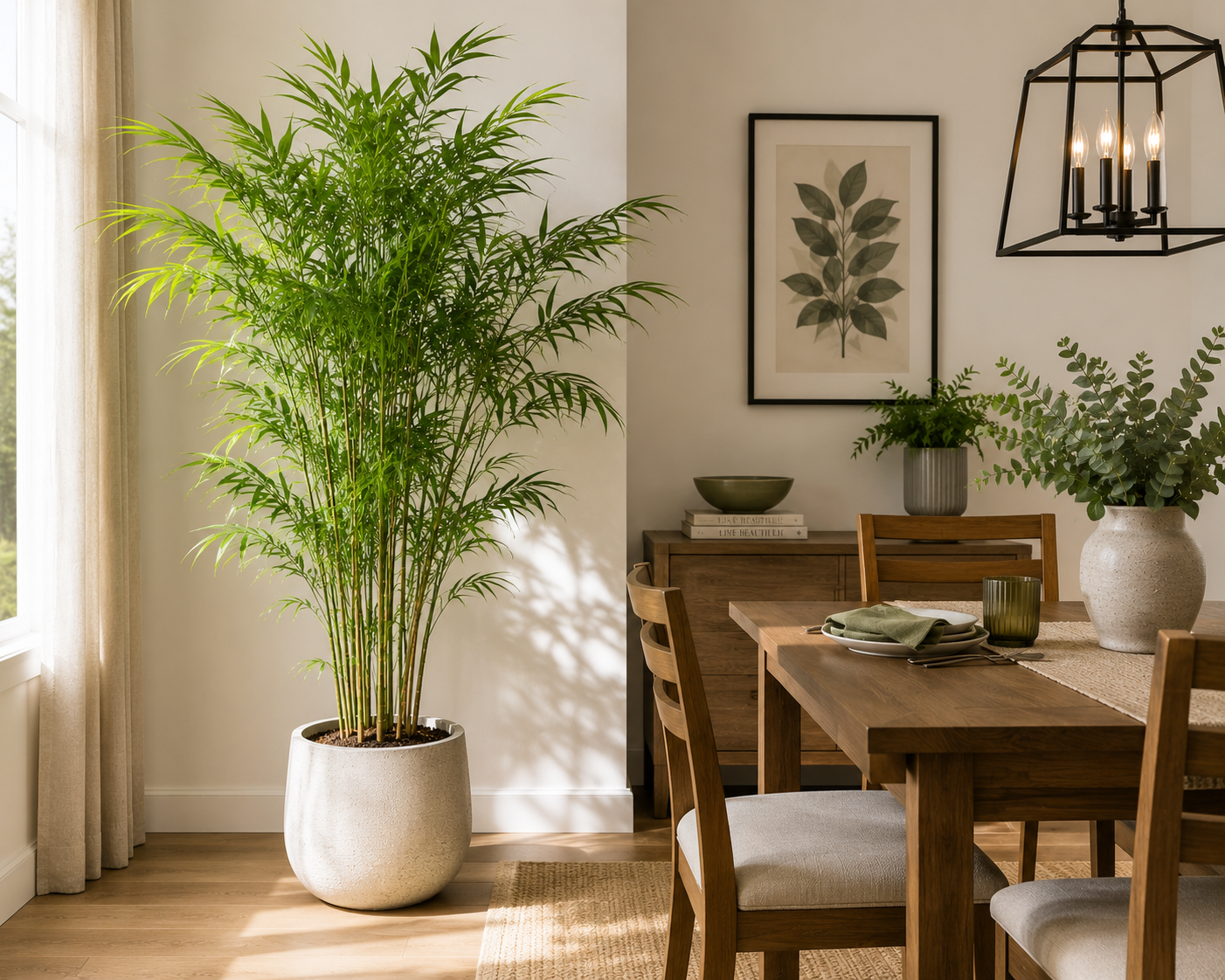
6. Bamboo Palm (Chamaedorea seifrizii)
Multiple slender stems give it a bamboo-like look, though it’s unrelated to actual bamboo. NASA’s clean air studies included it for its air-filtering ability, which is part of why it’s remained popular for decades.
Height indoors: 4–7 ft Water: Keep soil evenly moist; likes more humidity than Kentia or Lady Palm. Pet safety: Non-toxic.
7. Parlor Palm (Chamaedorea elegans)
A Victorian-era houseplant that’s stayed popular for over a century for the same reason it works today — it’s compact while young and one of the few palms that genuinely tolerates dim rooms.
Height indoors: 2–6 ft, slow-growing Water: Every 1–2 weeks; avoid soggy soil. Pet safety: Non-toxic — one of the safest tall picks for pet owners.
8. Fiddle Leaf Fig (Ficus lyrata) — Bright Light Only, Not True Low-Light
Worth including because it’s so often marketed as an easy low-light plant, which it isn’t. It needs bright, consistent indirect light and tends to drop leaves in dim corners. Only include it here if the room has a large window — don’t expect it to thrive in genuinely low light.
Pet safety: Toxic to cats and dogs.
9. Chinese Evergreen (Aglaonema), tall varieties
While most Chinese Evergreens stay compact, some cultivars grow into a taller, more upright form over several years and hold their colorful patterned leaves even in dim rooms.
Height indoors: Up to 3–4 ft for taller cultivars Water: Weekly; top inch dry before rewatering. Pet safety: Toxic to cats and dogs.
10. Cast Iron Plant (Aspidistra elatior)
Earned its reputation in Victorian homes lit by gas lamps and heated by coal fires — if it survived that, it survives a modern apartment with a small window.
Height indoors: 2–3 ft Water: Every 2–3 weeks; very forgiving of missed waterings. Pet safety: Non-toxic.
11. Dragon Tree (Dracaena draco or Dracaena marginata hybrids)
Dramatic, upright form with narrow arching leaves. Grows slowly enough that a young plant can live in the same pot and spot for years without needing to be moved.
Height indoors: 4–8 ft Water: Every 1–2 weeks, similar to other Dracaenas. Pet safety: Toxic to cats and dogs.
12. Weeping Fig (Ficus benjamina)
Dense, glossy foliage that forms a proper indoor tree shape over time. It’s notorious for dropping leaves after being moved or rotated too often — once you find a good spot, leave it there.
Height indoors: 6–10 ft Water: Weekly; keep soil evenly moist, not soggy. Pet safety: Toxic to cats and dogs — sap can also irritate skin.
13. Yucca Cane (Yucca elephantipes)
Thick, woody canes topped with spiky rosettes give it a sculptural, almost desert-plant look despite being commonly sold as an indoor tropical. Tolerates medium light but grows fuller in brighter spots.
Height indoors: 4–8 ft Water: Every 2–3 weeks; more drought-tolerant than most on this list. Pet safety: Toxic to cats and dogs.
14. Majesty Palm (Ravenea rivularis)
Delivers an instant tropical look but is genuinely fussier than the other palms here — it wants consistent moisture and humidity, and dry indoor air (especially in winter with heating on) causes brown fronds fast.
Height indoors: 4–7 ft Water: Keep soil consistently moist; mist regularly or use a humidifier in dry climates. Pet safety: Non-toxic.
15. Bird of Paradise (Strelitzia reginae)
Eventually becomes one of the tallest plants on this list, with huge paddle-shaped leaves — but it’s worth knowing upfront that it needs considerably more light than most other entries here to actually thrive and (rarely, indoors) flower.
Height indoors: Can reach 6–8 ft indoors Water: Weekly; likes bright indirect light more than true low light. Pet safety: Mildly toxic if ingested.
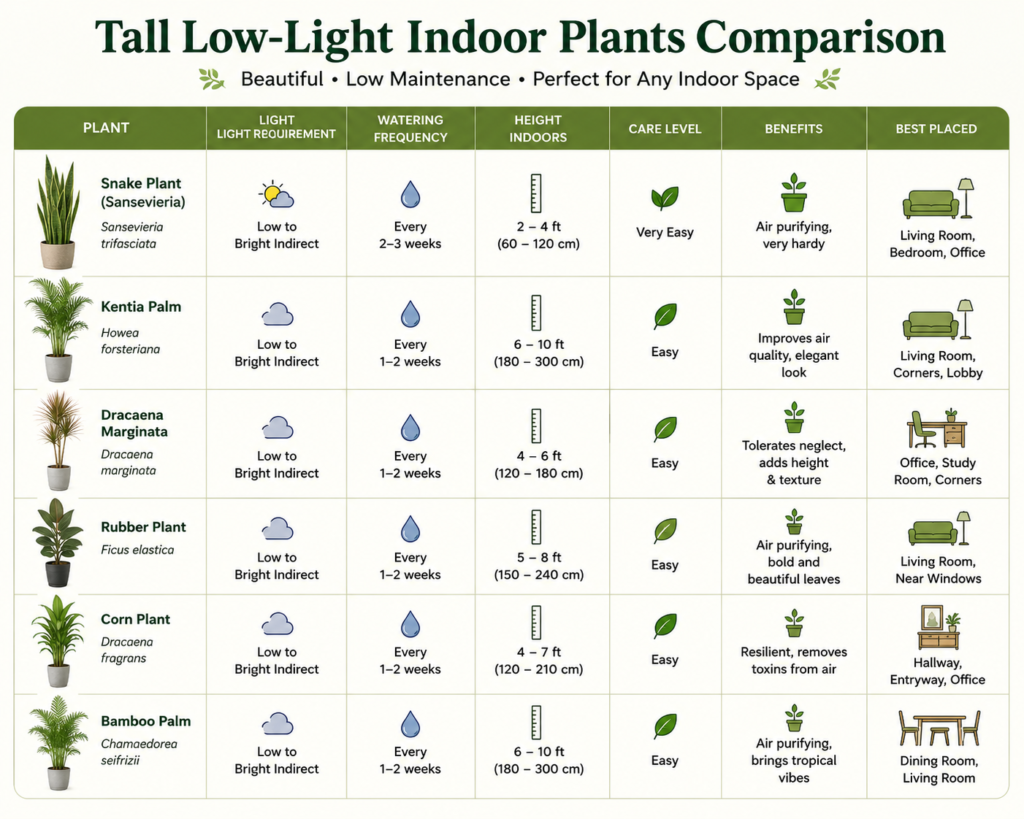
Quick Comparison Table
| Plant | Height | Water Frequency | True Low-Light? | Pet-Safe? |
|---|---|---|---|---|
| Kentia Palm | 6–10 ft | 1–2 weeks | Yes | Yes |
| Dracaena Marginata | Up to 8 ft | 1–2 weeks | Yes | No |
| Rubber Plant | 6–10 ft | Weekly | Medium light | No |
| Corn Plant | 6–8 ft | 1–2 weeks | Yes | No |
| Lady Palm | 4–6 ft | Keep moist | Yes | Yes |
| Bamboo Palm | 4–7 ft | Keep moist | Yes | Yes |
| Parlor Palm | 2–6 ft | 1–2 weeks | Yes | Yes |
| Fiddle Leaf Fig | Varies | Weekly | No — bright light | No |
| Chinese Evergreen (tall) | 3–4 ft | Weekly | Yes | No |
| Cast Iron Plant | 2–3 ft | 2–3 weeks | Yes | Yes |
| Dragon Tree | 4–8 ft | 1–2 weeks | Yes | No |
| Weeping Fig | 6–10 ft | Weekly | Medium light | No |
| Yucca Cane | 4–8 ft | 2–3 weeks | Medium light | No |
| Majesty Palm | 4–7 ft | Keep moist | Yes, high humidity | Yes |
| Bird of Paradise | 6–8 ft | Weekly | Medium-bright | Mild toxicity |
Best Rooms for Tall Indoor Plants
Living room corners, home offices, entryways, and hallways all work well — anywhere with a bit of open floor space and at least some ambient daylight. Keep plants away from heating vents and AC units, which dry out leaves fast regardless of how “low-maintenance” the species is.
How to Care for Tall Indoor Plants
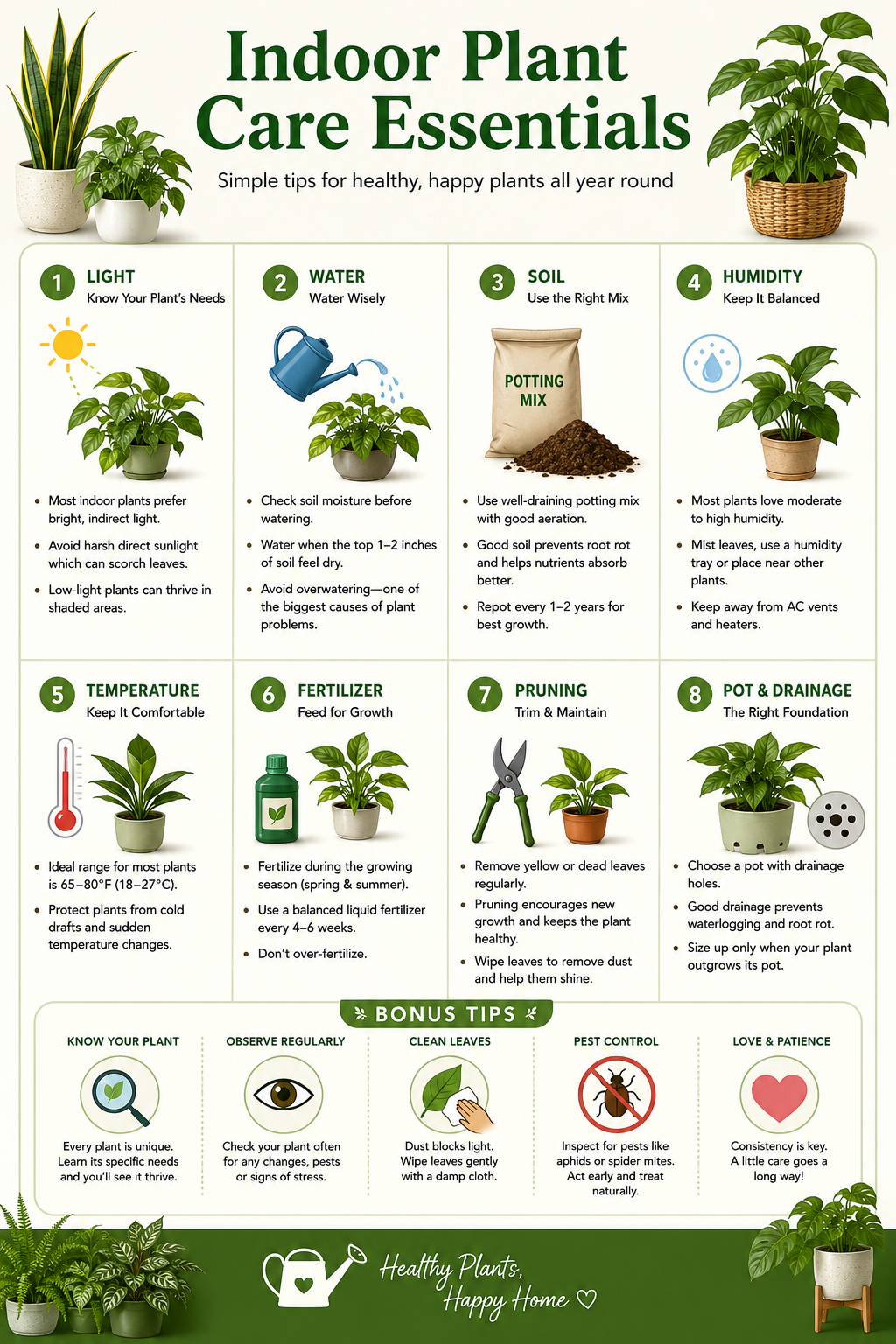
Water carefully. More tall houseplants die from overwatering than underwatering — check the top 1–2 inches of soil before watering rather than sticking to a fixed schedule.
Use pots with drainage holes. This matters even more for tall plants, since their pots hold more soil and take longer to dry out — standing water at the bottom is a common cause of root rot.
Rotate monthly. A quarter turn every few weeks keeps growth even instead of leaning toward the light source.
Dust the leaves. Large, broad leaves (Rubber Plant, Fiddle Leaf Fig, Corn Plant) collect visible dust that blocks light absorption — wipe with a damp cloth monthly.
Fertilize during spring and summer only, using a balanced liquid fertilizer at half strength. Skip it in winter when most of these plants are dormant.
Common Mistakes
- Assuming every “tall indoor plant” listicle entry is actually low-light (Fiddle Leaf Fig and Bird of Paradise are common examples of this mistake)
- Watering on a fixed schedule instead of checking the soil
- Skipping drainage holes for a decorative pot
- Moving plants (especially Weeping Fig) frequently, which triggers leaf drop
- Using heavy garden soil instead of a well-draining indoor mix
- Fertilizing through winter dormancy
Are Tall Indoor Plants Good for Small Apartments?
Yes, and often more so than several small plants — one well-placed tall plant in an unused corner tends to make a small room feel more finished, not more crowded. If floor space is genuinely tight, slower growers like Parlor Palm or Cast Iron Plant are easier to manage long-term than fast growers like Rubber Plant or Weeping Fig.
Frequently Asked Questions
Which tall indoor plant tolerates the lowest light? Cast Iron Plant and Kentia Palm handle the dimmest rooms on this list. Both will survive in spots where a Fiddle Leaf Fig or Bird of Paradise would decline within weeks.
Is it true some “low-light” tall plants actually need bright light? Yes — Fiddle Leaf Fig and Bird of Paradise are frequently sold as easy low-light options but genuinely need bright indirect light to stay full and healthy. Rubber Plant and Weeping Fig fall in between: they survive medium light but grow noticeably slower.
Which tall plants are safe if I have cats or dogs? Kentia Palm, Lady Palm, Bamboo Palm, Parlor Palm, Cast Iron Plant, and Majesty Palm are non-toxic. Most Dracaena and Ficus species (Rubber Plant, Weeping Fig, Corn Plant, Dragon Tree, Yucca Cane) are toxic if chewed.
How often should I water tall indoor plants? Most need watering every 1–3 weeks depending on species, pot size, and home humidity — check the soil rather than following a strict calendar, since overwatering is the more common killer.
Final Thoughts
You can absolutely fit a large, striking plant into a home without much natural light — you just need to pick the right species rather than assuming every tall plant qualifies as “low light” by default. Cast Iron Plant, Kentia Palm, and Parlor Palm are the safest bets for genuinely dim rooms; save Fiddle Leaf Fig and Bird of Paradise for the one bright corner you do have.